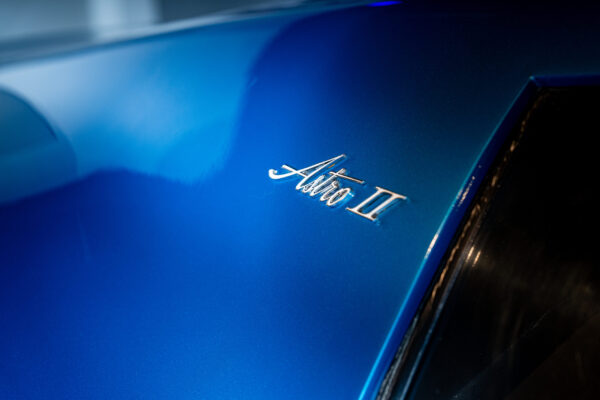

Long before the reveal of the C8 Corvette Stingray, General Motors was experimenting with mid-engine sports car designs. One of these concept cars was the 1967 Astro I, a low, sleek, futuristic-looking automobile created primarily as a styling exercise. The experiment convinced GM to build another mid-engine concept with greater potential to be a production automobile. Initially called XP-880, this next car would eventually become the 1968 Astro II, the first true mid-engine Corvette prototype. It is currently on display at the National Corvette Museum on loan from GM.
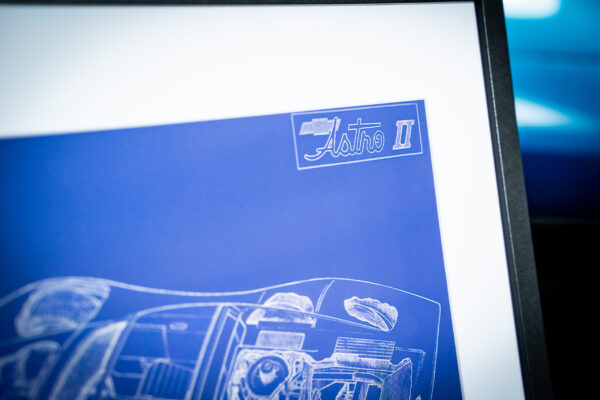
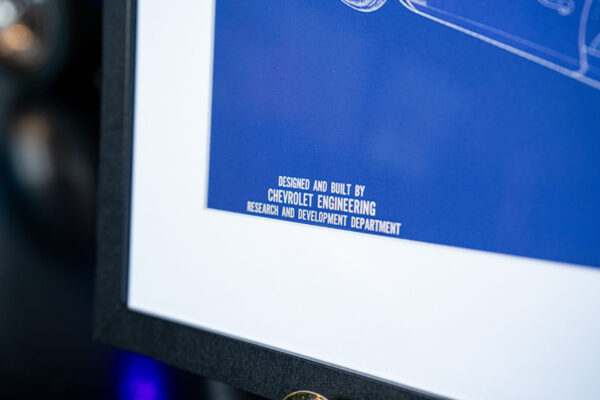
Frank Winchell, who oversaw Chevrolet’s Research and Development department, led the engineering of the Astro II. Winchell and Larry Nies equipped the car with a 427 cubic inch V8, which produced 400 horsepower. Nies chose to mount this engine backward within the car, allowing more room to install the alternator, water pump, and other equipment. Winchell’s team also built the Astro II’s steel frame and rear suspension components, supplementing the front half of the chassis with off the shelf parts. To assist with the creation of the vehicle, Chevrolet’s R&D department drafted this engineering blueprint for the Astro II’s internal components. Donated by Dana Forrester, the blueprint is now part of the Museum’s archival collections.
Winchell requested that Larry Shinoda design the Astro II’s body. Shinoda previously worked on Corvette concepts like the XP-819 and Mako Shark II. His design for the Astro II features his famous “coke-bottle” styling with smooth fender flares. The car has traditional doors, a larger front storage unit, and a clamshell bonnet for accessing the engine. The rear of the Astro II includes the customary four Corvette taillights, a sugar scoop rear window, and a series of vents for better airflow. Inside, the car is similar to the third-generation Corvette. However, the Astro II did not include the C3’s chrome bumpers or flip-up headlights. Shinoda’s design blended the front and rear fascia seamlessly into the body.
Ultimately, the Astro II did not go into production. GM was unwilling to risk transitioning the Corvette to a mid-engine layout, particularly since the C3 was selling well. Nevertheless, the Astro II’s innovative engineering and influential design make it one of the most successful Corvette concepts ever produced.